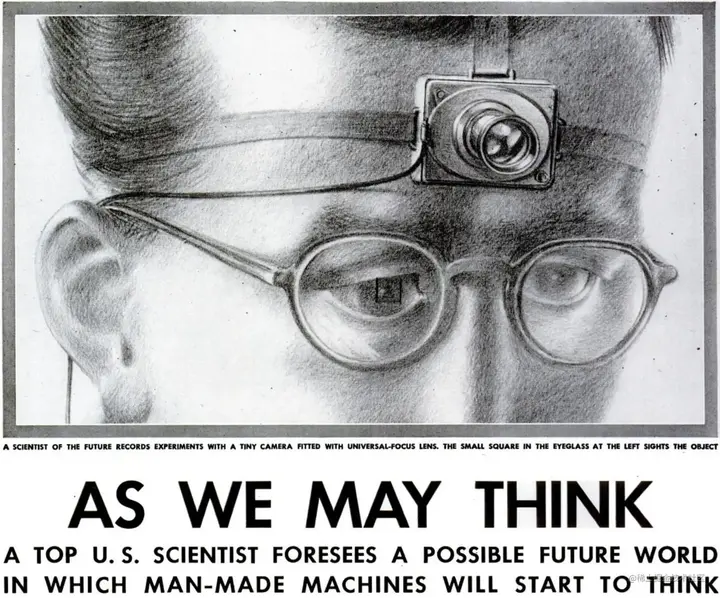
这篇散文于 1945 年 9 月广岛和长崎原爆前后以删节版重新发表,预见了信息社会的诸多方面,包括超文本、个人电脑、互联网、万维网、语音识别和在线百科全书,表达了他对科学努力走向毁灭而非理解方向的担忧,并表达了对集体记忆机器的渴望。他的memex 概念将使知识更容易获取,能将信息爆炸转变为知识爆炸。道格·恩格尔巴特 (Doug Engelbart)在文章发表后不久就看到了,并牢记 memex,开始了研究,最终发明了鼠标、文字处理器、超链接,并提出了新媒体的概念,而这些突破性的发明仅仅是使能技术而已。[ 1 ]
浏览器历史记录映射了可能的交互路径的轨迹。
"As Director of the Office of Scientific Research and Development, Dr. Vannevar Bush has coordinated the activities of some six thousand leading American scientists in the application of science to warfare.
作为科学研究与发展办公室主任,布什博士通过协调约6000 名美国顶尖科学家参与将科学应用于战争方面的活动。"
"In this significant article he holds up an incentive for scientists when the fighting has ceased.
在这篇意义重大的文章中,他为战斗结束后的科学家们提供了激励。"
"He urges that men of science should then turn to the massive task of making more accessible our bewildering store of knowledge.
他敦促科学家们应该转向这项艰巨的任务,使我们令人困惑的知识库更容易获取。"
"For many years inventions have extended man's physical powers rather than the powers of his mind.
多年来发明创新扩大了人的体力,而不是脑力。"
"Trip hammers that multiply the fists, microscopes that sharpen the eye, and engines of destruction and detection are new results, but the end results, of modern science.
倍增拳力的千斤锤、锐化眼睛的显微镜以及破坏和探测引擎是现代科学的新成果,但也是最终成果。"